
(949) 954-8181 Free Case Review No recovery, no fee.
(949) 954-8181 Free Case Review No recovery, no fee.
Do not sign. That is the single most important instruction if you have just received a severance offer or employment contract in Dana Point that asks you to waive claims against your employer. A signature is permanent. The offer usually is not.
Before you do anything else, take these steps:
California’s DIR guidance on final pay makes clear that severance is not automatically owed to you. That means when an employer offers it, they are buying something from you, specifically your legal claims. Treat the offer accordingly.
Pro Tip: Never rely on verbal promises from HR. If a manager says “we’ll give you a good reference” or “this won’t affect your unemployment,” get it in writing and attach it to the agreement as an addendum before you sign.
Most Dana Point employees see two distinct documents: an employment contract at the start of a job and a separation or severance agreement at the end. They share some clauses, but their purposes differ sharply.
A severance agreement typically bundles several provisions together:
At-will language appears in nearly every California employment contract and means either party can end the relationship at any time. That does not mean the employer can fire you for an illegal reason, but it does limit breach-of-contract claims. Other clauses to scrutinize:
Orange County and Dana Point employers in hospitality, retail, and professional services tend to offer lump-sum severance rather than extended pay continuation. Benefits continuation beyond the COBRA notice period is rare but worth asking for, especially in a soft local job market.

California stacks several protections on top of federal law. Knowing them lets you spot unenforceable language before you sign.
| Clause | California legal status | Source |
|---|---|---|
| Non-compete post-employment | Generally void | Bus. & Prof. Code §16600 |
| Non-disparagement without disclosure language | Unenforceable as written | Gov. Code §12964.5 |
| Waiver of unknown claims (Civil Code §1542) | Enforceable only with explicit, knowing waiver | Civil Code §1542 |
| PAGA representative claims | Cannot be waived in a private agreement | Labor Code |
| Workers’ comp / unemployment rights | Cannot be waived | DIR guidance |
| ADEA waiver for employees 40+ | Requires 21-day review period and 7-day revocation right | OWBPA / ADEA |
| Mandatory review period for separation agreements | At least five business days to consult an attorney in some contexts | CRD FAQ guidance |
The Civil Code §1542 waiver deserves special attention. It is the clause that says you are releasing claims you do not even know about yet. Many attorneys recommend negotiating a carve-out for unknown claims, or at minimum demanding a clear explanation of what you are giving up. The California Civil Rights Department publishes plain-language guidance on what separation agreements can and cannot lawfully restrict.
One more point: California law does not require employers to pay severance unless it is promised in a contract, collective bargaining agreement, or an established employer policy. If your employer is offering severance voluntarily, they want your signature on a release. That gives you leverage.
Some problems are obvious once you know what to look for. Others are buried in boilerplate. Here is what to flag immediately:
If any of these appear, do not sign. Request more time in writing, preserve all documents, and get legal review before responding. Disability discrimination claims, for example, are sometimes buried under broad release language. If that applies to your situation, the Dana Point disability discrimination resource from Optimum Employment Lawyers covers what those claims look like before they are signed away.
More than most employees realize. Employers expect negotiation. Here is a practical checklist of asks, ranked roughly by how often employers accept them:
A sample opening request to HR might read: “I’d like to request a 10-day extension to review this agreement with counsel, and I have a few questions about the scope of the release and the reference language. I’ll follow up in writing.” Short, professional, and it preserves your position.
Dana Point’s hospitality and tourism employers often prefer clean, lump-sum closings. If the job market is soft, prioritize benefits continuity over a slightly larger cash payment. For deeper guidance on negotiating employment contract terms in California, Optimum Employment Lawyers has published a practical breakdown of the most common levers.
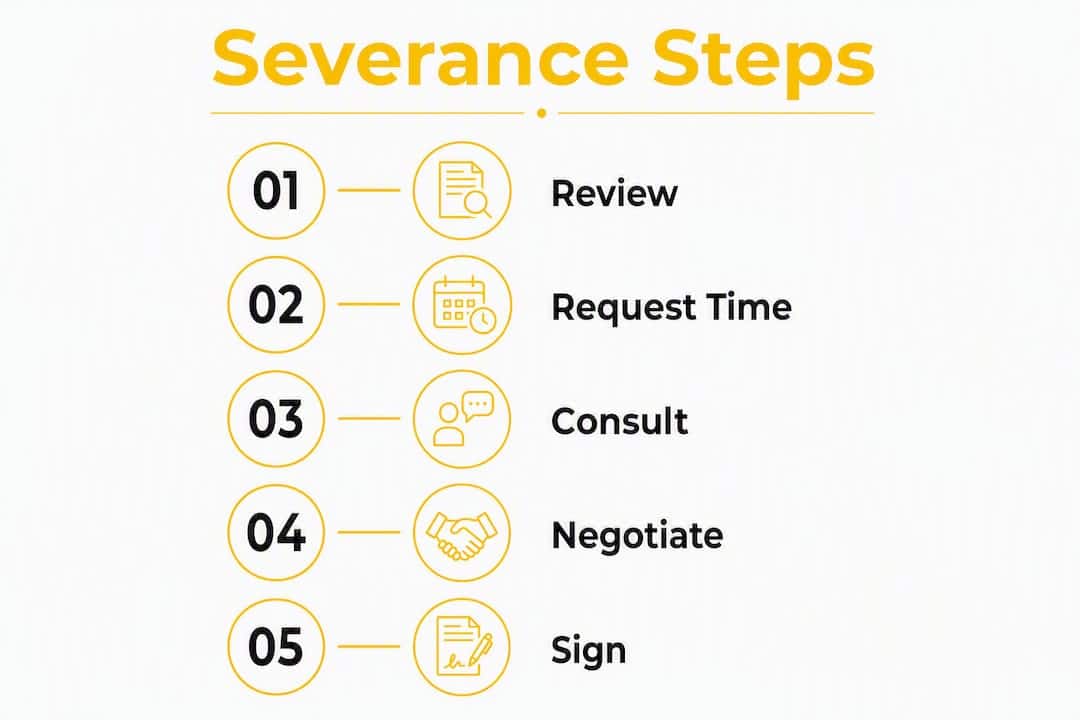
Not every severance review requires litigation. But several situations make legal representation worth the cost, especially under a contingency-fee model where you pay nothing unless you recover.
What a lawyer actually does in this context: they read the document against California statutes (Civil Code §1542, Gov. Code §12964.5), value your potential claims, identify unenforceable clauses, and negotiate directly with the employer’s counsel or HR. If negotiation fails, they can pursue litigation. Bring your offer letter, the severance draft, pay records, and any emails about your departure to the initial intake.
Optimum Employment Lawyers works exclusively on the employee side, handles contracts and severance agreement reviews for Dana Point and Orange County employees, and operates on a contingency-fee basis. No upfront cost for qualifying cases. The firm’s results include a $2.2 million settlement in a class action involving missed meal breaks, which reflects the kind of statutory exposure employers are trying to close off when they hand you a release.
Pro Tip: Ask your attorney specifically whether your employer’s release attempts to waive PAGA claims. If it does, that clause is void under California law, and the employer’s attempt to include it may signal larger wage-and-hour exposure worth pursuing.
Complex matters involving ERISA benefits, equity valuation, or active claims can add several weeks. Always confirm the consideration deadline in writing and track it on your calendar.
Signing a severance agreement without legal review means trading your legal claims for whatever the employer initially offered, which is almost never their best number.
| Point | Details |
|---|---|
| Do not sign immediately | Pause and get a lawyer review before waiving any claims, regardless of the deadline pressure. |
| California has specific protections | Non-competes, PAGA waivers, and non-disparagement clauses without required disclosures are unenforceable. |
| Severance is negotiable | More pay, COBRA subsidy, neutral reference, and a narrower release are all realistic asks. |
| Timing rules are strict | Employees 40+ have a federally mandated 21-day review and 7-day revocation period under the OWBPA. |
| Optimum Employment Lawyers | Offers contingency-fee severance and contract review for Dana Point employees, with no upfront cost for qualifying cases. |
If you have a severance offer or employment contract in Dana Point and a deadline is coming, the worst move is waiting. Optimum Employment Lawyers focuses entirely on employee-side California employment law, which means every case they take is against an employer, never for one. Their contingency-fee model means qualifying clients pay nothing unless there is a recovery.
For a free case review, contact Optimum Employment Lawyers directly. Bring the agreement, your pay records, and any emails about your departure. The intake covers what the release actually waives, whether any clauses are unenforceable under California law, and what a realistic negotiation looks like given your specific situation.
This article provides general legal information about California employment law and is not a substitute for advice from a licensed attorney about your specific situation. Consult a qualified employment lawyer before signing any agreement that waives legal claims.

© 2026 Optimum Employment Lawyers, PC
Legal Disclaimer | Privacy Policy
 Share
Share
