
(949) 954-8181 Free Case Review No recovery, no fee.
(949) 954-8181 Free Case Review No recovery, no fee.
Contracts and severance agreements in Irvine, CA, are legally binding documents that require you to waive significant employment rights in exchange for severance pay. California law gives you specific protections before you sign, including mandatory review periods, attorney consultation rights, and hard limits on what an employer can make you give up. Employees in Irvine and across Orange County face these agreements after layoffs, terminations, and workforce reductions. Signing without understanding what you are releasing can cost you claims worth far more than the severance offered. Knowing your rights before you put pen to paper is the single most important step you can take.
California law sets a minimum 5 business days for all employees to review a severance agreement before signing. That window exists so you can consult an attorney, read the document carefully, and decide whether the terms are fair.
Employees aged 40 and older receive stronger federal protections under the Age Discrimination in Employment Act (ADEA) and the Older Workers Benefit Protection Act (OWBPA). Those laws require employers to give workers 40 and older 21 days to review any agreement that waives age discrimination claims. After signing, you still have 7 days to revoke your signature. That revocation right cannot be waived or shortened by the employer.

California law also requires employers to advise you to consult an attorney before signing. If an employer pressures you to sign immediately or fails to include that notice in the agreement, the waiver may be unenforceable.
Key protections at a glance:
Pro Tip: If your employer hands you a severance agreement and says “we need this back by tomorrow,” that pressure tactic does not override your legal right to the full review period. You can and should insist on the time the law gives you.
Not every legal claim is on the table when you sign a severance agreement. California law draws a clear line between rights you can release and rights that stay with you no matter what the document says.
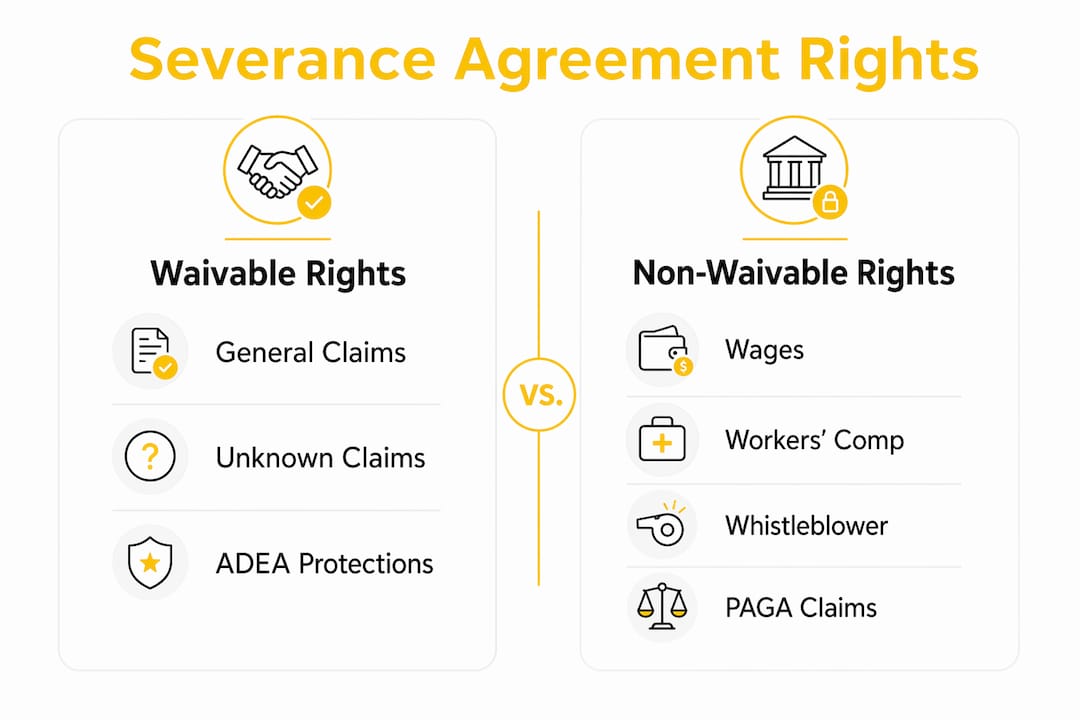
Employers typically ask you to waive claims such as:
These waivers are legal when the agreement meets California’s requirements for clear language and proper review periods.
Certain rights cannot be waived in California severance agreements, regardless of what the document states. These include:
The California Silenced No More Act, known as SB 331, adds another layer of protection. SB 331, effective January 1, 2022, bans severance agreements that prevent you from discussing unlawful workplace conduct, including harassment, discrimination, or retaliation. That means broad non-disparagement and confidentiality clauses that silence you about illegal acts are void under California law. An employer cannot buy your silence about workplace misconduct through a severance payment.
Pro Tip: If your severance agreement contains a blanket non-disparagement clause with no carve-out for unlawful conduct, that clause violates SB 331. You do not have to accept it, and an attorney can push back on it during negotiation.
Severance agreements in Irvine follow patterns that repeat across industries and employers. Recognizing these clauses before you sign protects you from giving up more than you realize.
Most severance agreements include a general release of all claims, known and unknown. Many also include a waiver under California Civil Code §1542, which can extinguish legal claims you do not even know you have at the time of signing. This is one of the most consequential provisions in any severance deal. If you later discover your employer violated wage laws or discriminated against you in ways you were unaware of, a §1542 waiver may block you from pursuing those claims.
Non-compete agreements are void in California under Business and Professions Code §16600. An employer cannot legally restrict you from working for a competitor after your employment ends. If your severance agreement includes a non-compete clause, it is unenforceable. Do not let it intimidate you into turning down a job offer.
Post-SB 331, confidentiality clauses that cover unlawful workplace conduct are invalid. Employers still include them, sometimes hoping employees will not know the law. Read these clauses carefully and flag any language that seems to prevent you from reporting illegal acts to government agencies.
True severance pay for past service generally does not affect your eligibility for unemployment benefits in California. Wages paid as a substitute for advance notice, sometimes called wages in lieu of notice, can disqualify you from benefits during the period those wages cover. The distinction matters. Ask your employer to clarify how the payment is classified before you sign.
AB 692, effective in 2026, bans employment contracts with “stay-or-pay” clauses and training repayment agreements for contracts entered into this year onward. That means employers can no longer require you to repay training costs if you leave or are terminated. If your severance agreement references such a repayment obligation tied to a 2026 contract, that provision is unenforceable.
Pro Tip: Print the severance agreement and mark every clause that restricts your future conduct. Bring that marked copy to your attorney consultation. It saves time and focuses the review on the provisions that matter most.
Negotiation is not just for executives. Every employee has the right to propose changes to a severance agreement, and many employers expect it. The key is knowing what to ask for and when to ask.
Start by using your full review period. The right to consult an attorney before signing is not a formality. An attorney who focuses on employee-side cases can identify unenforceable clauses, estimate the value of claims you are releasing, and propose specific changes to the agreement.
Common items that employees successfully negotiate include:
Know when to walk away. If the severance offer is below what your employment contract or union agreement promises, or if the agreement demands you waive claims worth significantly more than the payment offered, rejection may be the right call. Signing a bad agreement closes doors that may be worth opening in court.
Pro Tip: Check your original employment contract before responding to any severance offer. Many Irvine employees discover their contract already guarantees a minimum severance amount or notice period that the employer’s initial offer ignores.
If your employer wrongfully denies severance you were promised, that denial itself may be a legal claim worth pursuing separately from the severance negotiation.
Optimum Employment Lawyers focuses exclusively on employee-side cases throughout California, including Irvine and the broader Orange County area. The firm reviews employment contracts and severance agreements line by line, identifies unenforceable provisions, and negotiates directly with employers on your behalf.
Optimum Employment Lawyers has secured significant results for California employees, including a $2.2 million class action settlement for missed meal breaks. That track record reflects what aggressive, employee-focused representation looks like in practice. If you have received a severance agreement and are unsure whether to sign, the time to get advice is before you return that document. Contact an Irvine employment attorney at Optimum Employment Lawyers to schedule a consultation and get a clear picture of what you are being asked to give up.
Employees in Irvine, CA, hold significant legal rights before signing any severance agreement, and California law voids many common employer-drafted clauses outright.
| Point | Details |
|---|---|
| Review periods are mandatory | All employees get at least 5 business days; employees 40 and older get 21 days plus a 7-day revocation right. |
| Some rights cannot be waived | PAGA claims, unpaid wages, workers’ comp, and whistleblower protections survive any severance agreement. |
| SB 331 limits gag clauses | Confidentiality and non-disparagement clauses that cover unlawful workplace conduct are void under California law. |
| Non-competes are unenforceable | Business and Professions Code §16600 voids non-compete clauses in California severance agreements. |
| Negotiation is always an option | Severance amount, reference terms, and confidentiality language are all negotiable before you sign. |
California requires employers to give all employees at least 5 business days to review a severance agreement. Employees aged 40 and older receive 21 days under federal law, plus 7 days to revoke after signing.
No. Non-compete clauses are void under §16600 of California’s Business and Professions Code. You cannot be legally prevented from working for a competitor after your employment ends, regardless of what the agreement states.
True severance pay for past service generally does not disqualify you from unemployment benefits in California. Wages paid in place of advance notice can affect eligibility, so confirm how your payment is classified before signing.
Representative PAGA claims, earned wages, workers’ compensation rights, and whistleblower protections cannot be waived in any California severance agreement, even if the document says otherwise.
Use your full review period, read every clause, and consult an employment attorney before signing. An attorney can identify unenforceable provisions and negotiate better terms on your behalf, often at no upfront cost through contingency arrangements.

© 2026 Optimum Employment Lawyers, PC
Legal Disclaimer | Privacy Policy
 Share
Share
