
(949) 954-8181 Free Case Review No recovery, no fee.
(949) 954-8181 Free Case Review No recovery, no fee.
If you work in Aliso Viejo, California law entitles you to a paid 10-minute rest break for every four hours worked or major fraction thereof. When an employer denies, shortens, or interrupts that break, the standard remedy is one hour of premium pay for each violation, and you can recover it by filing a wage claim with the Division of Labor Standards Enforcement or by working with an employee-side firm like ours.
TL;DR:
- Shifts from 3.5 to 6 hours require one break; shifts over 6 to 10 require two, and shifts over 10 to 14 require three.
- A break is invalid if you must stay reachable, cover duties, or return when called; employers generally cannot require you to remain on site.
- Record each shift, break problem, and witness; save pay stubs, written policies, and messages showing that a supervisor discouraged or interrupted breaks.
- Start with DLSE Form 1; workers whose weekly hours varied may also need Form 55, and the agency recommends sending copies rather than originals.
- Most retaliation complaints must be filed within one year of the adverse action, and remedies can include reinstatement and back pay.
California’s rest break rule is straightforward once you know the formula. Nonexempt employees get 10 minutes of paid, uninterrupted rest for every four hours worked or major fraction of four hours, and that time counts as hours worked under the DLSE’s rest period guidance. A “major fraction” means anything over two hours: work 3.5 hours and you’ve triggered the obligation, because half of four hours is two, and 3.5 exceeds that threshold.
Employees who work less than 3.5 hours in a day are not entitled to a rest break at all. Beyond that floor, the number of required breaks scales with shift length:
Breaks should fall as close to the middle of each work period as practical. For an Aliso Viejo employee working an eight-hour shift at a retail store along Aliso Creek Road or an office near the Town Center, that typically means one break before the midpoint of the morning segment and one in the afternoon segment, in addition to any meal period. These standards come from the Industrial Welfare Commission wage orders and from Labor Code Section 226.7, which together form the legal backbone behind every rest break claim in the state.
A rest break only satisfies the law when it actually relieves you of work. The California Supreme Court has made clear that employers must relieve employees of all duties and employer control during rest time, which means an “on duty” rest period rarely qualifies. Several common patterns signal a violation:
Health care workers, retail associates, and restaurant staff in Aliso Viejo report these patterns often, particularly during peak hours when coverage is thin.
Recovering missed rest break pay starts with documentation and follows a defined path through the state’s wage claim system.
Document first. Before filing anything, build a record:
File with the DLSE. You start a wage claim with DLSE Form 1, the Initial Report or Claim. If your hours varied from week to week, you may also need Form 55, which the DLSE designates specifically for claimants seeking unpaid wages or premium pay tied to meal or rest period violations. You can file at your local DLSE office or by mail, and the agency recommends submitting copies, never originals, of your supporting records.
Know what happens next. After filing, the DLSE may schedule a Section 98.3 conference aimed at settlement, or proceed directly to a Section 98(a) hearing if the claim doesn’t settle. If a hearing officer issues an Order, Decision, or Award in your favor, it becomes enforceable as a court judgment unless either side appeals within the stated window.
Remedies available. The core remedy is one hour of pay at your regular rate for each workday a required rest period was not provided. Back pay and interest may also apply, and persistent or widespread violations across a workforce can sometimes support broader civil claims. Statute of limitations issues matter here too: waiting too long can shrink the number of workdays you can recover for, so earlier filing generally preserves more of your claim.
Employers cannot discipline, demote, cut hours, or fire you for asking about or taking your rest breaks. Retaliation can look like:
If this happens, you can file a retaliation complaint with the Labor Commissioner’s Office. Most retaliation complaints carry a one-year filing deadline from the date of the adverse action, though some statutes allow different windows, so checking the specific deadline for your situation matters. Remedies can include reinstatement, back pay, and other penalties, and an unfavorable outcome can still be appealed through the standard enforcement process.
A genuine rest break is yours to use as you see fit. You can typically leave the building, sit in your car, grab coffee down the street, or run a personal errand if time allows, because the break only counts as rest when your employer has no claim on your time.
Some safety-sensitive roles, such as certain security or utility positions, carry narrow exceptions tied to the nature of the work, but these are limited and fact-specific.
Pro Tip: Save any text or email where a manager tells you to “just take it at your desk” or “stay close” during a break. Those messages often become the clearest evidence in a claim.
Before taking action, gather what you need and know where to go.
| Action | Why it matters |
|---|---|
| Keep a break log | Supports your claim with contemporaneous detail |
| Save pay stubs | Shows whether premium pay was ever paid |
| File DLSE Form 1 | Starts the formal wage claim process |
| Consult a lawyer | Helps with retaliation or multi-employee patterns |
The baseline remedy stays simple: one hour of pay per missed rest break, recoverable through a DLSE wage claim that’s open to any worker, no attorney required to start.
We represent only employees, never employers, across California wage and hour disputes, including rest break violations in Aliso Viejo and throughout Orange County.
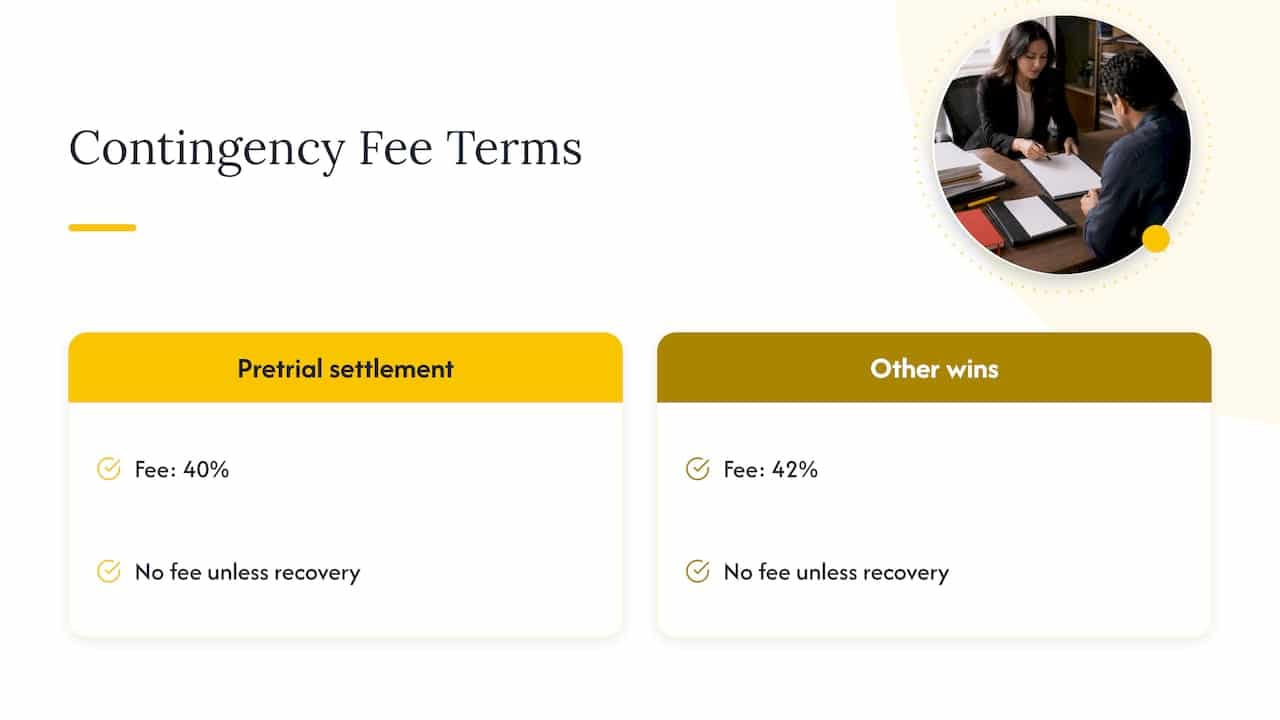
If your employer has denied, shortened, or discouraged your rest breaks, early action protects your evidence and keeps you inside DLSE filing windows. We review rest break violations and related meal break claims at no upfront cost, since we work on a contingency fee, taking 40% on a pre-trial settlement or 42% on other wins. You pay nothing unless we recover for you. Reach out through our contact page for a free case evaluation, or browse our full range of wage and hour services to see where your situation fits.
This article is general information, not a substitute for advice from a qualified lawyer. Consult a qualified legal professional about your own circumstances before acting on anything here.
A denied meal break generally entitles you to one additional hour of pay at your regular rate for each workday the meal period wasn’t provided, similar to the rest break premium. You can raise this through the same DLSE wage claim process used for rest break violations, and our meal break resource covers how the two rules interact.
Yes, nonexempt employees working at least 3.5 hours in a day are entitled to 10 minutes of paid rest for every four hours worked or major fraction thereof. The requirement comes from Industrial Welfare Commission wage orders and Labor Code Section 226.7.
There is no formal rule tied to rest breaks under California law aside from the 10 minutes of rest per four hours of work or major fraction thereof. Confusion sometimes arises from rounding practices in timekeeping systems, which are a separate issue from the rest break entitlement itself.
California law doesn’t require a dedicated break room, but it does require that rest time genuinely relieve you of work duties and employer control. If the lack of a break area means you’re effectively still working during your break, such as remaining at a register or workstation, that time becomes compensable rather than a true rest period.

© 2026 Optimum Employment Lawyers, PC
Legal Disclaimer | Privacy Policy
 Share
Share
