
(949) 954-8181 Free Case Review No recovery, no fee.
(949) 954-8181 Free Case Review No recovery, no fee.


California Labor Code 1102.5 defines whistleblower retaliation protection as the legal prohibition against any employer punishing an employee for reporting workplace misconduct they reasonably believe violates state or federal law. For Anaheim employees, this protection is stronger than ever. Senate Bill 497, signed into law and effective january 1, 2024, created a 90-day rebuttable presumption of retaliation when an employer takes adverse action within 90 days of a protected report. The California Civil Rights Department (CRD) and Cal/OSHA both enforce these rights. If you reported misconduct at your Anaheim workplace and faced punishment, the law is on your side.
California Labor Code 1102.5 is the primary law protecting employees who report workplace misconduct. It prohibits employers from retaliating against any employee who discloses information about a violation of state or federal law to a supervisor, government agency, or law enforcement. The law covers Anaheim employees across every industry, from hospitality and healthcare to manufacturing and retail.

The California Supreme Court’s 2022 decision in Lawson v. PPG Architectural Finishes, Inc. fundamentally changed how whistleblower retaliation claims are proven in California. The court eliminated the federal McDonnell Douglas framework for Section 1102.5 claims and replaced it with a state-specific two-step burden-shifting test. This change directly favors employees.
The two steps work as follows:
That “clear and convincing” standard is deliberately high. It makes it significantly harder for employers to escape liability once you establish a contributing factor.
Senate Bill 497 added a powerful procedural tool on top of the Lawson framework. Under SB 497, if your employer takes adverse action within 90 days of your protected report, a rebuttable presumption of retaliation automatically arises. The employer must then produce a legitimate, non-retaliatory reason to overcome it. If the employer fails to meet that burden, you prevail at summary judgment without needing a full trial.
Common adverse actions that trigger these protections include:
Pro Tip: Raise the SB 497 presumption explicitly in your legal pleadings. Failing to assert it in writing risks losing the procedural advantage it provides, even if the timing clearly supports your claim.
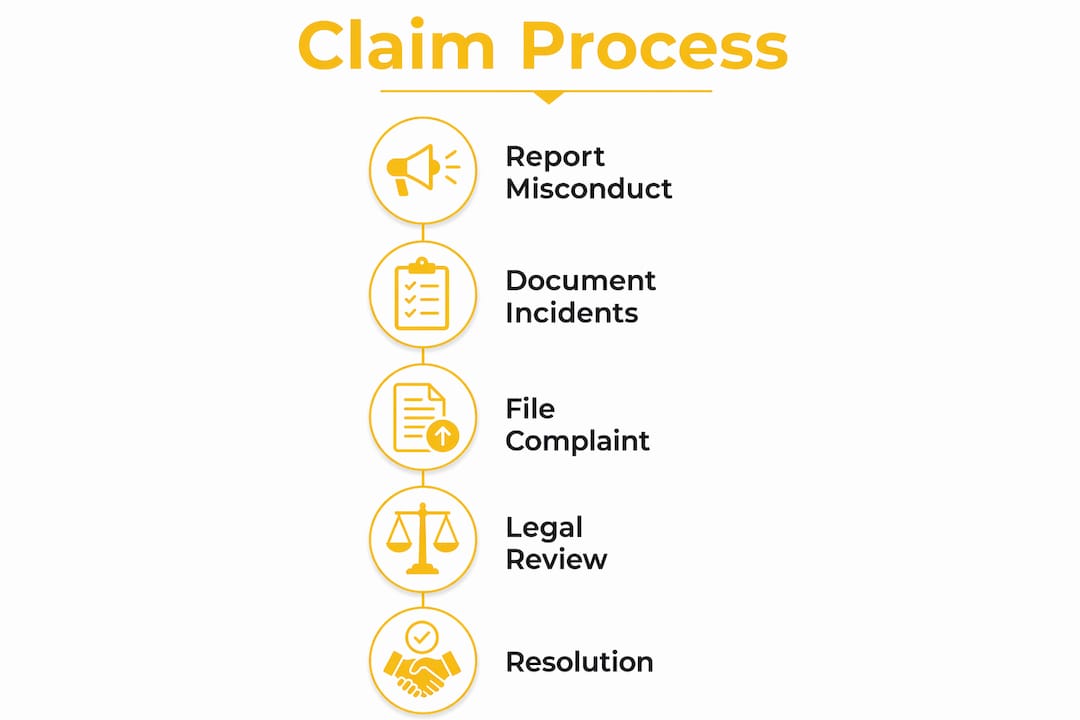
Proving retaliation in an Anaheim workplace requires building a clear factual record. Courts and agencies look at timing, documentation, and the decision-maker’s knowledge of your report. The stronger your paper trail, the harder it is for your employer to claim the adverse action was unrelated.
Follow these steps to build a solid case:
One critical point many employees miss: you do not need to prove your employer actually broke the law. California protects you based on a reasonable belief in good faith that a violation occurred. Your belief does not have to be correct. It only has to be reasonable.
Pro Tip: Keep a personal log outside of work systems. Record every incident, conversation, and change in treatment with dates and the names of anyone present. This log can become a key exhibit in your case.
Filing deadlines for retaliation claims in California vary by agency and claim type. Missing a deadline can permanently bar your claim, regardless of how strong the underlying facts are. Anaheim employees should know these timelines before taking any action.
| Agency or Claim Type | Deadline | Where to File |
|---|---|---|
| California Labor Code 1102.5 | 3 years from retaliation | Superior Court or Labor Commissioner |
| Cal/OSHA safety retaliation | 6 months from retaliation | Cal/OSHA district office |
| Workers’ compensation retaliation | 1 year from retaliation | Workers’ Compensation Appeals Board |
| CRD (FEHA-based retaliation) | 3 years from retaliation | California Civil Rights Department |
These filing deadlines and procedures are not flexible. The 6-month window for Cal/OSHA complaints is especially short and catches many employees off guard.
Anaheim employees can file retaliation claims in Orange County Superior Court, with the Labor Commissioner’s office, or directly with the CRD depending on the nature of the claim. Remote filing options and video appearances are now available statewide, which increases access for employees who cannot easily travel to a government office.
Filing a complaint is itself a protected activity. If your employer retaliates against you again after you file, that new retaliation strengthens your existing claim and may create an entirely separate cause of action. Document any new adverse actions immediately and report them to the relevant agency without delay.
Taking the right steps after reporting workplace misconduct in Anaheim protects both your safety and your legal claim. Acting quickly and methodically makes a measurable difference in case outcomes.
For Anaheim employees who report misconduct involving wage theft, safety violations, or discrimination, the whistleblower protections under California law apply immediately upon making a good-faith report. You do not need to wait for an investigation to conclude before those protections attach.
Employees in neighboring Orange County cities have used these same protections successfully. The legal framework that applies in Anaheim is the same one that governs retaliation claims in Orange and across the region.
California law provides meaningful financial and professional remedies for employees who prove whistleblower retaliation. These remedies are designed to make you whole and to punish employers who violate the law.
Available remedies under Labor Code 1102.5 and related statutes include:
The $10,000 civil penalty per violation is a detail many employees and employers overlook. If your employer took multiple retaliatory actions, such as a demotion followed by a pay cut and then a termination, each act may be counted separately. That exposure adds up quickly and often motivates early settlement.
For employees who need legal representation in Anaheim, the Anaheim employment lawyers at Optimum Employment Lawyers handle these cases on an employee-only basis.
California Labor Code 1102.5 and SB 497 together give Anaheim employees the strongest whistleblower retaliation protections in the country, with a 90-day presumption that shifts the legal burden directly onto employers.
| Point | Details |
|---|---|
| SB 497 presumption | Adverse action within 90 days of your report creates an automatic presumption of retaliation. |
| Lawson v. PPG standard | You only need to show your report was a contributing factor; the employer must disprove retaliation by clear and convincing evidence. |
| Filing deadlines vary | Labor Code claims allow 3 years, but Cal/OSHA complaints must be filed within 6 months. |
| Reasonable belief is enough | You do not need to prove the employer broke the law, only that you had a good-faith reason to believe it did. |
| Penalties reach $10,000 per violation | Each retaliatory act can trigger a separate $10,000 civil penalty under Labor Code Section 1102.5(f). |
Optimum Employment Lawyers represents employees in Anaheim and across Orange County who have faced retaliation for reporting workplace misconduct. The firm works exclusively on the employee side, which means every strategy, every filing, and every negotiation is built around your interests. Optimum Employment Lawyers has secured significant results for California employees, including a $2.2 million class action settlement for missed meal breaks. If you reported misconduct and your employer punished you for it, you have legal options worth pursuing. Contact Optimum Employment Lawyers for a confidential case evaluation and find out exactly where you stand.
For employees who want additional context on why legal counsel matters when pursuing a direct lawsuit, resources on employment legal representation can help you understand the process before your first consultation.
Whistleblower retaliation is any adverse action an employer takes against an employee for reporting a reasonably believed violation of state or federal law. California Labor Code 1102.5 prohibits this conduct and provides employees with the right to sue for damages.
If your employer takes adverse action within 90 days of your protected report, California law automatically presumes that action was retaliatory. The employer must then produce clear and convincing evidence of a legitimate reason, or you win on that issue without a full trial.
No. California protects employees who have a reasonable, good-faith belief that a violation occurred. You do not need to be right about the underlying misconduct to qualify for whistleblower protection.
The deadline depends on the type of claim. Labor Code 1102.5 claims allow three years, while Cal/OSHA safety retaliation complaints must be filed within six months of the retaliatory act.
Proven retaliation entitles you to back pay, front pay, emotional distress damages, reinstatement, and civil penalties up to $10,000 per violation. Attorney fees are also recoverable in many whistleblower cases under California law.

© 2026 Optimum Employment Lawyers, PC
Legal Disclaimer | Privacy Policy
 Share
Share
