
(949) 954-8181 Free Case Review No recovery, no fee.
(949) 954-8181 Free Case Review No recovery, no fee.
If you worked unpaid hours as a nonexempt employee, you likely have a right to overtime pay, and the clock matters more than you think. Start by saving every pay stub, schedule, and timecard you can find, and write down dates, hours, and witness names while your memory is fresh. Lake Forest employees carry the same overtime protections as every other California worker, and local counsel can review your situation at no upfront cost.
TL;DR:
- Employers often owe unpaid overtime if employees work before clock-in, after clock-out, or during unpaid breaks, especially if improperly classified or misclassified.
- California law requires overtime at time-and-a-half beyond 8 hours per day and double time after 12 hours, with specific rules on bonuses, splits, and exemptions.
- Solid evidence such as pay stubs, schedules, emails, and witness statements is crucial for proving unpaid overtime claims, with digital records and personal logs being highly valuable.
- Unpaid overtime back pay is the core recovery, but employees may also claim penalties, interest, and damages, with statutes of limitations being two years generally, extended to three for willful violations.
- Filing a claim with the DLSE or pursuing a private lawsuit is recommended for substantial or patterned violations, with contingency fee options available for legal representation.
Not every missed paycheck adds up to a legal claim, but certain patterns are strong indicators that your employer owes you money. The first question is classification: if you are paid hourly, punch a clock, or spend most of your day on manual or routine tasks rather than independent decision-making, you are probably nonexempt and entitled to overtime regardless of your job title.
Watch for these common red flags:
If two or more of these sound familiar, gather pay stubs, written schedules, timecards, work emails, text messages about hours, and the names of coworkers who saw you working late or arriving early. Start a dated, contemporaneous log today, noting start and end times, meal breaks, and any tasks performed off the clock. A simple notebook or a notes app works, as long as entries are made the same day the work happens.
Pro Tip: Photograph your pay stubs and timecards weekly. Employers sometimes alter or lose payroll records, and a dated photo on your phone is hard to dispute later.
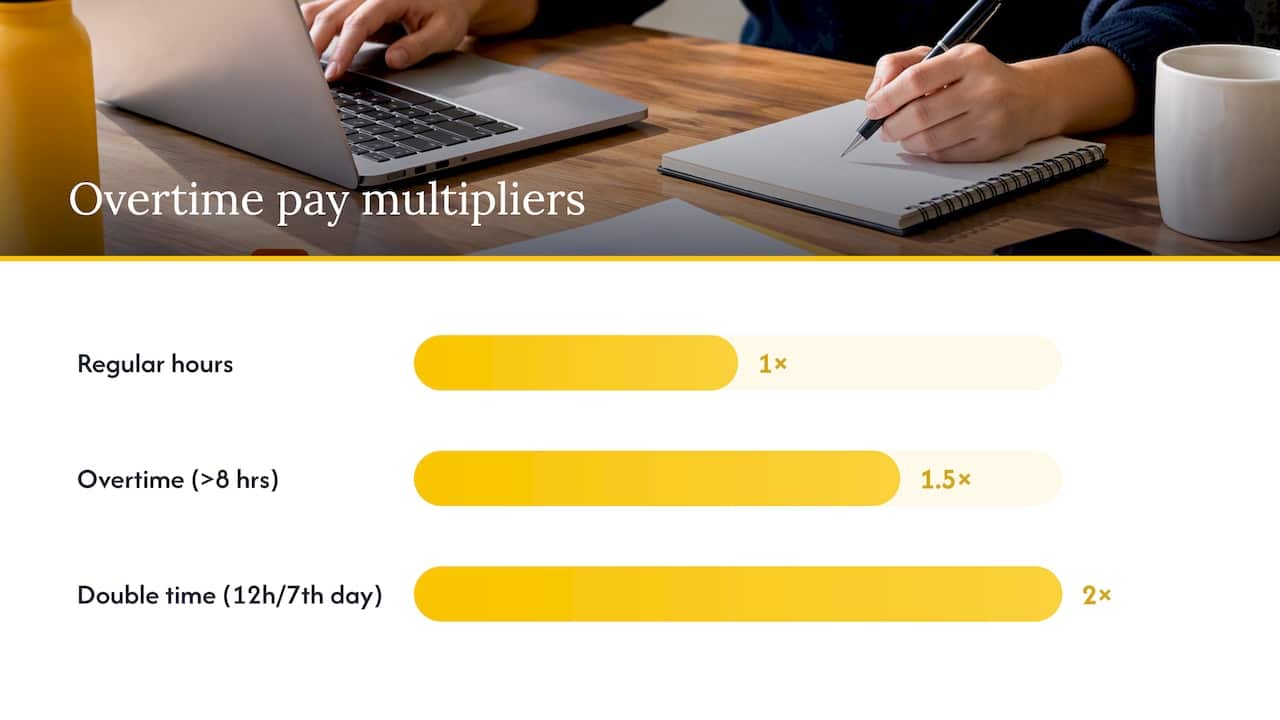
California’s overtime law is more generous than federal law, and understanding the baseline numbers helps you figure out roughly what you might be owed. Nonexempt employees are entitled to time-and-a-half for hours worked beyond 8 in a single workday, not just beyond 40 in a week, and double time kicks in after 12 hours in a workday or after 8 hours on the seventh consecutive day of work in a workweek. Weekly overtime also applies once total hours exceed 40, even if no single day crossed the 8-hour mark.
Exemptions are where many disputes start. The most commonly misapplied exemptions are:
All three exemptions also require a minimum salary that is at least twice the state minimum wage for full-time work, and employers sometimes assume a salary alone satisfies the exemption when the duties test is not actually met. A supervisor title does not make someone exempt if they spend most of their shift stocking shelves or ringing up customers alongside the staff they supposedly manage.
Bonuses and commissions complicate the math further. When a nondiscretionary bonus is tied to production or attendance, it must be factored into the regular rate of pay before calculating overtime, which raises the overtime rate above a simple time-and-a-half of the base hourly wage. Split-shift premiums, owed when an employee’s workday is interrupted by an unpaid, non-sleeping period, add another layer that employers frequently skip.
Here is a simplified example, for illustration only: say an employee earns $20 an hour and works 10 hours in a single day with no bonus involved. The first 8 hours are paid at $20, and the next 2 hours are paid at time-and-a-half, or $30 an hour. That day alone should total $220, not the $200 a flat hourly calculation would produce. Multiply a shortfall like that across weeks or months, and the unpaid balance can grow substantially even when the daily gap looks small.
Strong documentation turns a disputed claim into a straightforward one. Acceptable evidence includes pay stubs, timecards, payroll exports, scheduling software screenshots, emails or texts where a manager asked you to work extra hours, and even device login or badge-swipe logs that show when you actually arrived and left.
When an employer’s records are missing, incomplete, or simply do not match reality, courts and the Labor Commissioner will accept reasonable reconstructions supported by your own contemporaneous notes and credible witness testimony. A handwritten journal or a marked calendar carries real weight in these situations, which is exactly why starting one now matters more than waiting until a dispute escalates.
To preserve digital evidence effectively:
Pro Tip: Email yourself a weekly summary of hours worked. A timestamped email creates an independent record that is difficult for an employer to dispute later.
Our team at Optimum Employment Lawyers has worked through Lake Forest wage-and-hour matters where employer records were incomplete, and client-maintained logs and messages were central to reconstructing accurate hours and building a credible claim.
The core remedy in an unpaid overtime case is back pay, meaning the employer makes up the gap between what you were paid and what you should have earned under California’s overtime rules. The U.S. Department of Labor describes back pay as a standard remedy for wage violations, ordering an employer to cover the shortfall between actual and required pay.
Beyond back wages, California law allows for additional recovery:
The statute of limitations gives most wage claims two years, extending to three years if the violation is willful, according to federal back-pay guidance. Willfulness generally shows up when an employer knew about the overtime requirement and ignored it anyway, such as continuing a “no overtime without written approval” policy after being warned it violates wage law, or deliberately misclassifying a role to avoid paying time-and-a-half.
To see how this adds up, consider a hypothetical: an employee who missed a small amount in unpaid overtime each week over a couple of years could have a potential back-pay claim that compounds significantly over time, illustrating how even modest weekly shortfalls add up, not an estimate of any real case. Add waiting-time penalties or a class of similarly affected coworkers, and the total recovery can rise well beyond the initial shortfall.
Once you believe you have a claim, the path forward generally follows one of three routes, and choosing the right one depends on how complex your situation is and what remedy you want.
Administrative investigations through the DLSE commonly take several months to resolve, while private lawsuits can take longer but allow for broader discovery and larger potential recoveries, especially in class or representative actions.
Certain situations make hiring a lawyer worth the conversation rather than handling a claim alone:
At a first consultation, bring your pay stubs, any timecards or schedules you have saved, your personal hour log, and copies of relevant emails or texts. Ask how the attorney calculates potential back pay, what percentage of a settlement or award the firm takes as a fee, and how long similar cases in your area have typically taken to resolve.
We build our practice around representing employees exclusively, making every strategy decision with your paycheck and working conditions in mind. For Lake Forest workers dealing with unpaid overtime, we handle wage-and-hour matters, including misclassification disputes, missed meal and rest break claims, and class actions when an employer’s pay practice affected an entire team.
Our services page outlines the wage-and-hour, discrimination, and retaliation cases we take on, and representation is offered on a contingency-fee basis, meaning you pay nothing upfront. Our fee structure is 40% of a pre-trial settlement or 42% on other wins, so our interests stay aligned with getting you the strongest possible outcome rather than the fastest one.
We have secured results for California workers in wage disputes before, including significant settlements for class action cases involving unpaid meal breaks. If you are ready to find out what your unpaid overtime might be worth, bring your pay stubs, schedules, and any personal notes on hours worked to a free consultation with our Lake Forest team.
This article is general information, not a substitute for advice from a qualified lawyer. Consult a qualified legal professional about your own circumstances before acting on anything here.
An employer can face serious consequences for withholding overtime pay, including back wages, penalties, and interest, but enforcement depends on employees raising the issue through a DLSE complaint or lawsuit. The law does not forgive unpaid overtime just because it went unnoticed for a while, and claims within the statute of limitations remain enforceable.
You can file a wage claim with the California Division of Labor Standards Enforcement or pursue a private lawsuit to recover the unpaid amount, along with any applicable penalties and interest. Keeping pay stubs, schedules, and a personal log of hours worked makes the process faster and strengthens your position.
In most nonexempt jobs, an employer can require overtime as a condition of employment and can discipline or terminate an employee who refuses to work scheduled hours, as long as the required overtime pay is provided. Refusing overtime is different from being denied pay for overtime already worked, which remains owed regardless of scheduling disputes.
An employer cannot lawfully refuse to pay overtime that a nonexempt employee has actually worked, even if the extra hours were not formally approved in advance. If a manager allowed or should reasonably have known about the extra work, the time generally still counts toward overtime pay.

© 2026 Optimum Employment Lawyers, PC
Legal Disclaimer | Privacy Policy
 Share
Share
