
(949) 954-8181 Free Case Review No recovery, no fee.
(949) 954-8181 Free Case Review No recovery, no fee.
If your employer in Lake Forest shorted your paycheck, skipped your breaks, or misclassified you to dodge overtime, California law gives you enforceable rights to recover what you’re owed, plus penalties on top. You have two immediate paths: file a wage claim with the California Labor Commissioner’s Office (DLSE) or schedule a free consultation with a California employment lawyer. Either route can recover unpaid wages, meal and rest premiums, waiting-time penalties, and paystub violations.
TL;DR:
- Employees can recover unpaid wages, penalties, and penalties for paystub violations through either a wage claim with the DLSE or a civil lawsuit, with the latter often necessary for complex or class actions.
- Common violations include off-the-clock work, miscalculated overtime, missed or interrupted breaks, misclassification, and unreimbursed expenses, often resulting from faulty payroll systems.
- Penalties for violations can include meal and rest premiums, waiting-time penalties, paystub penalties, and damages compounded across entire workforces in class or PAGA claims.
- Gathering pay stubs, time records, and notes quickly is crucial, as evidence such as rounding errors and unexplained schedule changes are often key to winning claims.
- Immediate documentation and legal consultation within the first 30 days improve chances of recovering owed wages and penalties, especially if your employer retaliates or if remote work changed your hours and expenses.
Wage theft rarely announces itself. It shows up as a rounded time clock, a bonus that mysteriously never factored into your overtime rate, or a lunch break that got interrupted so many times it stopped being a break at all. Lake Forest sits inside Orange County’s dense mix of retail centers, medical offices, and light manufacturing along the Foothill Ranch corridor, and wage-and-hour disputes there follow the same patterns seen statewide.
The most common violations fall into five categories:
Technical errors like these are not rare edge cases. Timekeeping rounding and break scheduling mistakes remain among the top causes of wage-and-hour litigation in California, largely because they’re baked into payroll software defaults that employers never audit. A single rounding rule applied across a 40-person Lake Forest staff for two years can turn a “small” scheduling glitch into a six-figure exposure for the employer, and a real recovery opportunity for you.
If any of this sounds familiar, read through our breakdown of meal break violations specific to Lake Forest for a closer look at how these claims typically unfold locally.
Wage claims aren’t limited to the paycheck difference. California layers statutory penalties on top of unpaid wages, which is why claims that look small on paper often settle for far more.
Statistic Callout: According to Nolo’s overview of California unpaid wage claims, employees typically have up to three years to file most statutory wage claims, and that window is often the difference between a full recovery and a claim that’s partially time-barred.
You generally have two ways to pursue unpaid wages: file directly with the state, or bring a civil lawsuit. Each has a different rhythm, and picking the wrong one can slow your recovery.
Filing a DLSE wage claim:
Filing early has a practical benefit beyond the legal deadline: it locks in your version of events and often prompts the employer to investigate internally, which can lead to a faster settlement than either side expected. That’s one reason the DLSE’s own filing resources emphasize prompt action.
When a civil lawsuit makes more sense:
Acting quickly matters regardless of which path you choose. Most statutory wage claims carry a filing window of up to three years, but evidence disappears fast: payroll systems get overwritten, managers who witnessed violations leave the company, and memories fade. A California employment lawyer typically handles the evidence collection, wage calculations, negotiation with opposing counsel, and litigation if the case doesn’t settle, letting you focus on your job (or your next one) instead of chasing paperwork. Our overview of the wage and hour claims process covers what that representation looks like in practice.
The strength of a wage claim usually comes down to paper trail. Before you file anything, gather what you can.
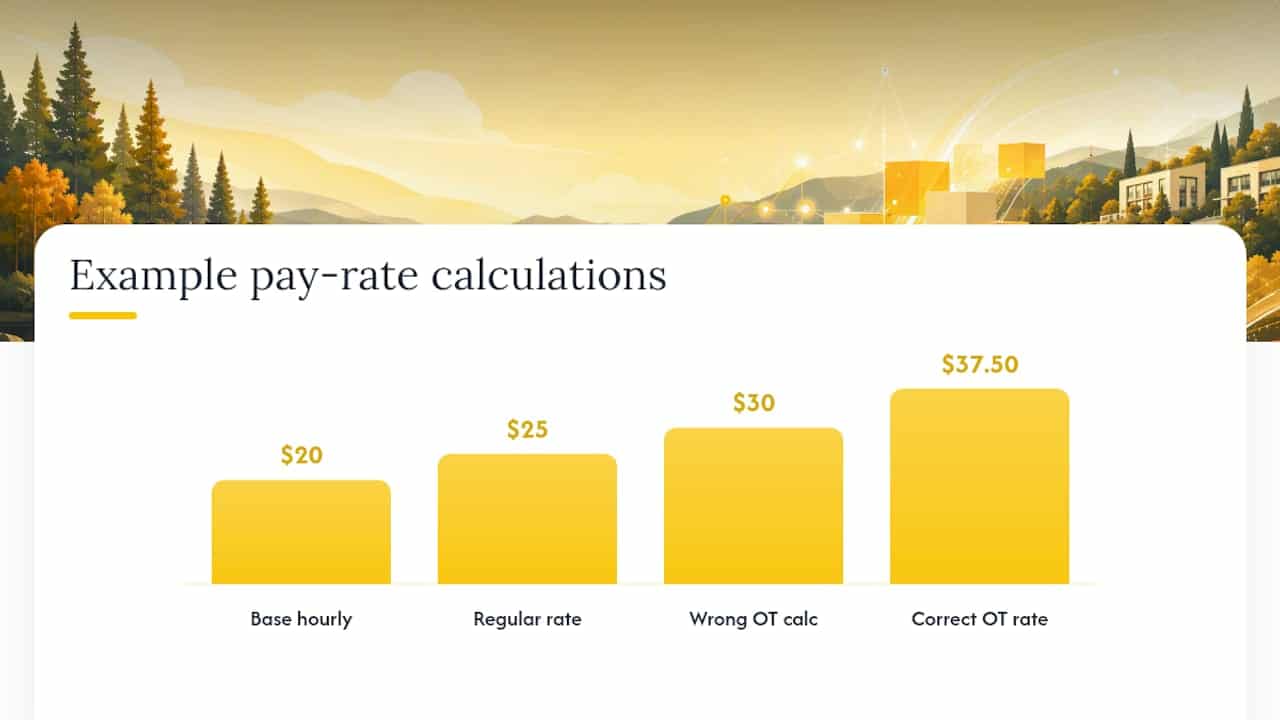
How to calculate unpaid overtime: Your regular rate isn’t just your hourly wage. It must include non-discretionary bonuses and commissions divided across the hours worked in that period. Nolo’s guide to unpaid wage claims notes that overtime calculated off base pay alone, while ignoring bonus income, is one of the most common ways employers underpay without realizing it. Say you earn $20 an hour and receive a $200 non-discretionary bonus for a 40-hour week. Your regular rate becomes $25 an hour ($800 base plus $200 bonus, divided by 40 hours), so any overtime that week should be paid at $37.50, not $30.
How to calculate break premiums: Each missed or interrupted meal or rest period is worth one hour of pay at your regular rate, up to two premiums per day (one for meal, one for rest violations). Waiting-time penalties are calculated as your daily rate multiplied by the number of days payment was late, capped at 30 days.
Pro Tip: Keep a personal log with dates, times, and short notes every time a break gets cut short or skipped. Contemporaneous notes carry far more weight than a memory reconstructed six months later.
Time rounding deserves special attention. The California Supreme Court’s ruling in Donohue v. AMN Services found that employers cannot round meal-period time punches, and doing so creates a rebuttable presumption that a violation occurred. If your employer’s timekeeping system rounds your punches to the nearest quarter hour, that alone can support a claim. For minimum wage shortfalls specifically, our minimum wage violation examples page shows how those gaps typically get calculated. And if commissions or bonuses are part of the dispute, our page on unpaid commissions covers how nonstandard pay structures factor into a claim.
Filing a wage claim is a protected activity under California law, and employers cannot legally punish you for it. Retaliation shows up in obvious and subtle forms: termination, demotion, sudden schedule cuts, denial of promised hours, or a manager who starts documenting every minor mistake right after you complained.
Protected activity isn’t limited to formal DLSE filings. It also covers internal complaints to HR, cooperating with a Labor Commissioner investigation, or discussing wages with coworkers. If you notice retaliatory treatment, document it the same way you’d document a wage violation:
Remedies for proven retaliation can include reinstatement, back pay, emotional distress damages, and recovery of attorney fees, often on top of whatever the underlying wage claim was worth.
Optimum Employment Lawyers represents employees exclusively, never employers, across California wage-and-hour disputes, wrongful termination, and workplace discrimination cases. That employee-only focus, combined with contingency-fee representation, means you don’t pay anything upfront to have a case reviewed.
The firm’s track record includes a $2.2 million settlement in a meal-break class action, a result built on exactly the kind of per-employee, per-pay-period premium calculations described earlier in this guide. The firm also maintains a dedicated Lake Forest employee rights page reflecting ongoing work with employees throughout the area.
A first consultation typically covers:
If your case ultimately requires trial, the firm’s attorneys handle that too, rather than pushing every case toward a quick settlement regardless of value.
California’s Wage Orders, issued by the Industrial Welfare Commission, set the specific rules for meal breaks, rest periods, minimum wage, and overtime by industry. Most Lake Forest employers, whether in retail along El Toro Road, healthcare offices, or professional services, fall under Wage Order 4 or 7, both of which mandate the 30-minute meal break and 10-minute rest break structure discussed earlier.
Wage Orders also set industry-specific rules that generic overtime explainers often miss, such as reporting-time pay (partial pay owed when you’re sent home early after reporting to work) and split-shift premiums for employees whose workday is broken into non-consecutive blocks. If you work in retail or food service in Lake Forest and your shift got cut short after you’d already shown up, reporting-time pay may apply even if you technically worked fewer hours than scheduled.
An employer operating under an Alternative Workweek Schedule (AWS) still owes you extra break entitlements and correct overtime unless that schedule was adopted by a genuine two-thirds employee vote and properly filed. Many Lake Forest employers assume an informal four-day workweek arrangement qualifies as an AWS. It usually doesn’t, and that gap alone can support an unpaid overtime claim.
Employers facing a wage claim tend to reach for a handful of predictable defenses. Recognizing them early helps you and your attorney prepare a response before the employer raises it.
The most common defense is claiming the employee was properly classified as exempt or as an independent contractor. Countering this requires showing the actual duties performed, not the job title, since California courts look at what the work actually involved.
Employers also frequently argue that missed breaks were the employee’s “choice,” pointing to a written policy that technically offered breaks. That defense weakens considerably once you show breaks were routinely interrupted in practice or that supervisors discouraged taking them, regardless of what the handbook said.
A third common defense involves timekeeping records that appear clean because of rounding. As established in Donohue v. AMN Services, rounded meal-period punches create a presumption of violation that shifts the burden back to the employer to prove breaks were actually provided. Finally, employers sometimes claim a violation was isolated or accidental. Payroll records covering multiple pay periods across multiple employees usually tell a different story, which is exactly why class and PAGA claims exist.
Once you realize something’s off with your pay or your breaks, the next 30 days matter more than any other stretch of the process.
Start by writing down what happened while it’s fresh: dates, times, who was involved, and what was said. Request copies of your own pay stubs and time records, which California employers are required to provide upon request. Don’t confront your manager aggressively or resign in frustration before understanding your options, since either move can complicate a claim or forfeit leverage you didn’t know you had.
Next, calculate a rough estimate of what you believe you’re owed using the methods described earlier in this guide, even if it’s imprecise. Then decide between filing a DLSE wage claim yourself or contacting a California employment lawyer for a free case evaluation. If your situation involves multiple coworkers experiencing the same issue, mention that during the consultation. Claims involving misclassification tied to independent contractor status sometimes intersect with tax reporting questions, and Tolliver’s overview of 1099 rules in California is a useful resource if you’re unsure how your classification affects your tax filings.
Keep a copy of everything you send to your employer or the DLSE, and never rely solely on records your employer controls.
The pandemic reshaped several corners of California wage-and-hour law in ways that still matter now. Remote work pushed reimbursement claims to the forefront, since employees working from home routinely incurred internet, phone, and equipment costs their employers never covered. That gap remains one of the more overlooked violations today, and it’s covered under the same reimbursement obligations discussed earlier in this guide.
Hybrid and remote scheduling also complicated meal and rest break tracking. Employers with weaker timekeeping systems for remote staff often can’t demonstrate that breaks were actually offered, which plays directly into the rounding and recordkeeping issues established in Donohue. Enforcement agencies, including the DLSE, have continued prioritizing wage claims tied to remote and hybrid work arrangements as more employers settle into permanent flexible schedules. If your Lake Forest employer moved you to remote or hybrid work at any point and never adjusted its reimbursement or timekeeping practices to match, that’s worth raising directly in any wage claim you file.
If you’re dealing with unpaid wages, missed meal or rest breaks, misclassification, or retaliation after speaking up, that’s exactly the kind of case Optimum Employment Lawyers takes on for Lake Forest employees. Bring whatever you have: pay stubs, schedules, any notes about interrupted breaks, and dates tied to retaliation if that applies. You don’t need a complete file to start; a partial one is enough for an initial review.
There’s no upfront cost. The firm works on contingency, meaning attorney fees typically come out of your recovery, not your pocket, so pursuing a legitimate claim doesn’t add financial risk on top of what your employer already cost you. A first consultation walks through your documentation, gives you a realistic read on your claim, and lays out whether a DLSE filing or direct legal action fits your situation better. Contact Optimum Employment Lawyers to get that conversation started.
This article is general information, not a substitute for advice from a qualified lawyer. Consult a qualified legal professional about your own circumstances before acting on anything here.

© 2026 Optimum Employment Lawyers, PC
Legal Disclaimer | Privacy Policy
 Share
Share
