
(949) 954-8181 Free Case Review No recovery, no fee.
(949) 954-8181 Free Case Review No recovery, no fee.
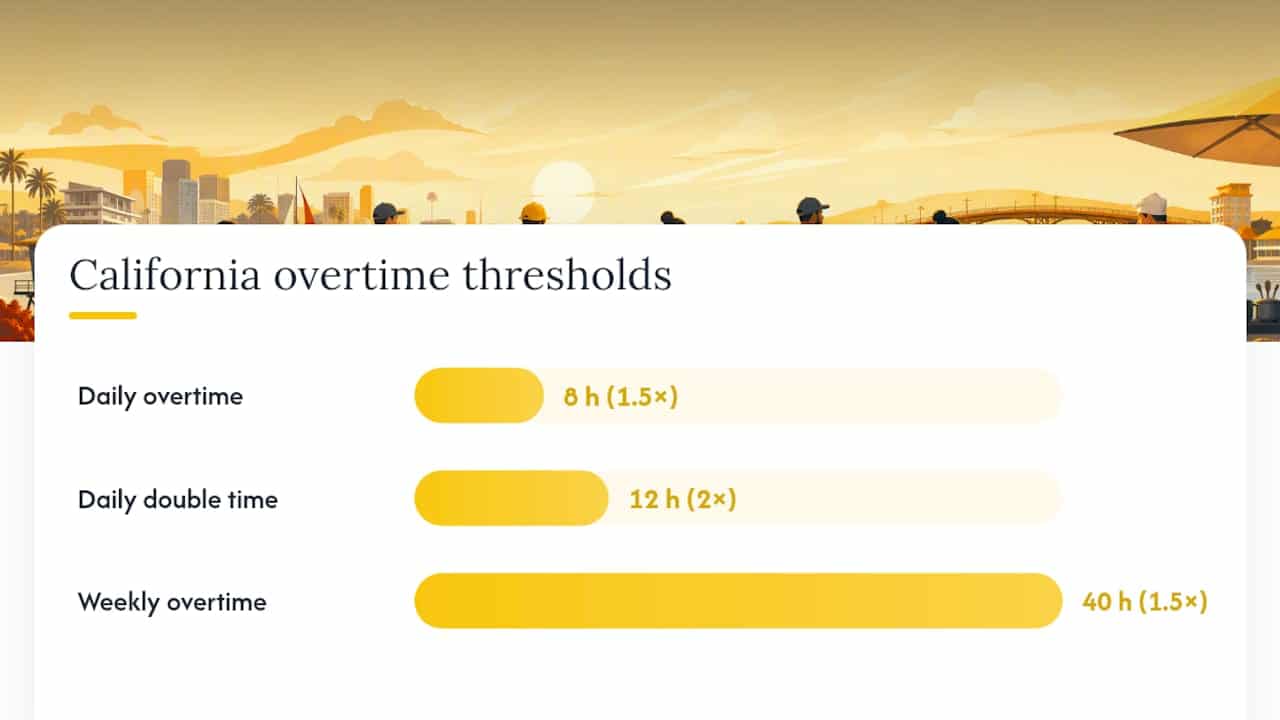
If you’re a nonexempt employee in Newport Beach who worked more than eight hours in a day or 40 in a week and didn’t get paid time and a half, you’re likely owed unpaid overtime under California law. The same holds if your employer skipped meal or rest break premiums, misclassified you as exempt, or told you to clock out and keep working. California Labor Code §510 sets the baseline: 1.5 times your regular rate for hours beyond eight in a day or 40 in a week. Double time applies once you cross 12 hours in a day or work more than eight hours on your seventh consecutive workday.
Here’s what to do in the next 24 hours, not next month:
Quick fact: Under Labor Code §510, the 1.5x and 2x overtime multipliers apply automatically to nonexempt employees. Your employer doesn’t get to opt out by calling you “salaried” or “management” unless you actually meet the legal test for exemption. Newport Beach’s hospitality, retail, and professional-services economy sees this problem constantly, and it’s rarely accidental.
| Point | Details |
|---|---|
| Overtime thresholds are daily and weekly | 1.5x pay applies past 8 hours/day or 40 hours/week; double time applies past 12 hours/day or 8 hours on a seventh consecutive day. |
| Salary doesn’t equal exempt status | Exemption requires meeting both a salary minimum and a specific duties test, not just a job title. |
| Start documenting now | Save paystubs, build a personal time log, and gather any emails referencing unpaid hours worked. |
| Choose your filing path deliberately | DLSE wage claims suit smaller, straightforward cases; civil lawsuits fit larger or class-wide violations. |
| Three-year filing window applies | Most unpaid overtime claims must be filed within three years of the violation. |
| Optimum Employment Lawyers works on contingency | No upfront fee, employee-focused representation, and a track record including a major meal-break settlement. |
California overtime rules apply the same way in Newport Beach as anywhere else in the state, but the industries here (hospitality along the harbor, retail on Fashion Island, professional offices near Jamboree Road) tend to generate specific violation patterns worth knowing before you assume your case is unusual.
The controlling statute is straightforward on paper. Labor Code §510 requires 1.5 times your regular rate for any hours worked past eight in a single day or past 40 in a workweek. Double time kicks in past 12 hours in a day, and also applies to any hours worked past eight on the seventh consecutive day of a workweek. These thresholds are daily and weekly, not just weekly, which surprises a lot of people who assume overtime only starts after 40 hours total.
Whether these rules apply to you at all depends on whether you’re classified as exempt or nonexempt. That classification isn’t a title your employer assigns; it’s a legal test tied to the Industrial Welfare Commission Wage Orders, which spell out specific duties and salary thresholds for executive, administrative, and professional exemptions. An employee has to satisfy both a minimum salary requirement and a duties test focused on independent judgment and discretion, decision-making authority, or specialized professional work.
A salary alone proves nothing. Legal Aid at Work notes that paying someone a fixed weekly amount does not automatically exempt them from overtime; employers regularly slap an “exempt” label on a job just to skip overtime obligations, and courts look past the paycheck structure to what the job actually involves day to day.
| Employee category | Overtime status | Key consideration |
|---|---|---|
| Hourly nonexempt | Covered by §510 daily/weekly rules | Nearly always owed overtime for hours over 8/day or 40/week |
| Salaried nonexempt | Covered by §510 despite salary | Salary doesn’t erase overtime rights if duties test fails |
| True executive/administrative exempt | Not covered | Must meet both salary minimum and duties test |
| Commission-based sales | May be exempt under specific Wage Order rules | Exemption depends on earnings structure and industry |
| Domestic workers, some agricultural roles | Different rules apply | Check the specific applicable Wage Order |
Pro Tip: Ask yourself one question: do you spend most of your day exercising independent judgment on significant business matters, or are you mostly following procedures, taking orders, or performing manual and technical tasks under supervision? If it’s the latter, you’re probably nonexempt regardless of your job title.
Wage theft rarely announces itself. It shows up as a manager asking you to “just finish up” after clocking out, or a paystub that never quite matches the hours you actually worked.
Off-the-clock work is the most common pattern Optimum Employment Lawyers sees, particularly in restaurants along Balboa Peninsula and retail shops near Fashion Island where employees get asked to prep before opening or close out registers after clocking out. Misclassification runs a close second: administrative assistants, junior managers, and coordinators at professional firms near John Wayne Airport frequently get labeled “exempt” despite spending most of their day on tasks with no real decision-making authority.
Watch for these red flags:
Seasonal tourism work adds another wrinkle. Hotels and event venues near the harbor often ramp up staffing for summer weekends, and overtime miscalculations spike when scheduling gets chaotic and shifts run long without anyone tracking the extra hours accurately.
The math starts with your “regular rate,” a term that confuses almost everyone at first because it isn’t always the same as your hourly wage. CalChamber explains that the regular rate includes not just your base hourly pay but also certain nondiscretionary bonuses and commissions, averaged across the hours worked in that period. Employers who calculate overtime using only your base hourly rate, while ignoring bonuses baked into your pay, are shortchanging you.
Once you know your regular rate, the multipliers from Labor Code §510 apply directly: 1.5x for hours over 8 in a day or 40 in a week, and 2x for hours over 12 in a day or over 8 on a seventh consecutive workday.
Here’s a sample calculation for a Newport Beach retail employee earning $22 an hour who also received a $100 nondiscretionary bonus for a 45 hour week:
That’s just the overtime piece. A DLSE brochure on recovering unpaid wages outlines additional damages employees can pursue: missed meal and rest period premiums (one extra hour of pay per missed break), waiting-time penalties under Labor Code §203 if final pay was late, and in some cases liquidated damages or interest on top of the base amount owed.
Two traps to watch for. “Pyramiding” happens when overtime gets double counted across daily and weekly calculations for the same hours, inflating or deflating the real number depending on which direction the error runs. Piece-rate conversion is trickier still: if you’re paid per unit or per job rather than by the hour, reconstructing an accurate regular rate often requires production records and typical completion times, and that’s usually where a case gets complex enough to need professional help rather than a spreadsheet.
Your case is only as strong as your paper trail, and the good news is most of what you need is sitting in old emails, drawers, and phone photos you’ve probably never organized.

Start with what your employer has already given you: paystubs, any written job description or offer letter, company handbook policies on breaks and overtime, and final pay records if you’ve already left the job. If your employer used a timeclock or app, request copies of your records; you’re entitled to them under California law.
When employer records are missing or incomplete, your own documentation carries real weight. A detailed personal log noting dates, start and end times, unpaid tasks, and any coworkers who witnessed the pattern can be decisive at a hearing, especially when paired with corroborating emails, text messages, or calendar entries that timestamp when work actually happened.
Two DLSE forms matter early in this process. DLSE Form 1, the Initial Report or Claim, formally opens your wage claim with the Labor Commissioner’s office. DLSE Form 55, the Computation Worksheet, walks through your hours and pay to calculate what’s owed; filing it alongside your initial claim helps the Deputy Labor Commissioner quantify your case faster, particularly if your hours were irregular week to week.
Before you file anything or call a lawyer, run through this checklist:
Pro Tip: If your employer never gave you consistent timecards, log your hours daily going forward using your phone’s notes app, and back-date what you remember as precisely as possible with approximate times rather than guessing at round numbers. A log built in real time carries far more credibility than one written from memory after the fact.
You have two main roads for recovering unpaid overtime: file a wage claim with the Division of Labor Standards Enforcement, commonly called the Labor Commissioner’s office, or file a civil lawsuit in Orange County Superior Court. Neither is universally better; the right choice depends on your claim’s size, complexity, and whether other employees share your situation.
The DLSE process moves through a defined sequence:
That hearing is more formal than most people expect. DLSE guidance on wage hearings makes clear that testimony is taken under oath and recorded, and missing your scheduled hearing date can result in dismissal even when the facts are squarely in your favor.
Civil litigation makes more sense when your claim involves larger dollar amounts, potential class action exposure (multiple employees experiencing the same violation), or when you want a lawyer driving discovery to obtain company-wide timekeeping and payroll records the DLSE process might not fully surface.
Use this to decide which path fits:
Timeline callout: Wage claims in California generally must be filed within three years of the violation for most unpaid overtime claims. Don’t wait to find out which of the three years already ran out.
Complaining about unpaid overtime, even informally to a manager, is a protected activity under California law, and retaliation for it (termination, demotion, cut hours, sudden negative reviews) opens a second legal claim on top of your wage claim.
If retaliation happens, document it immediately: save the termination letter or write down exactly what was said and when, preserve every email or text related to your complaint and the retaliatory action, and note any witnesses to the conversation where you raised the overtime issue.

You can pursue a retaliation claim through the DLSE’s Retaliation Complaint Investigation Unit or as part of a broader civil lawsuit, and timing matters since retaliation claims carry their own filing deadlines separate from the underlying wage claim.
Protected activity isn’t limited to formal DLSE filings. Telling HR you’re owed overtime, refusing to work off the clock, or even discussing pay with coworkers can qualify. If your employer takes any adverse action shortly after you raise wage concerns, that timing itself becomes evidence, and it’s worth a conversation with an employment lawyer sooner rather than later.
Not every unpaid overtime situation needs a lawyer. A single missed paycheck with clear records might resolve cleanly through a DLSE claim you handle yourself. But certain situations tip the scales toward professional representation fast.
Consider hiring counsel when your employer has destroyed or never kept accurate time records, when you’re dealing with commission or piece-rate calculations that require reconstructing hours from production data, when multiple coworkers faced the same violation (raising class action potential), or when your employer retaliated after you raised the issue.
Employment lawyers who take wage and hour cases, including Optimum Employment Lawyers, typically work on contingency. That means no upfront fee; the firm gets paid a percentage of your settlement or court award only if you recover money. This structure matters because it means the size of the shortfall, not your ability to pay a retainer, determines whether pursuing a claim makes sense.
Here’s what representation typically involves:
Optimum Employment Lawyers has secured significant results for California employees, including a significant settlement in a class action involving missed meal breaks, an example of what’s possible when wage and hour violations affect a group of workers rather than just one. If your situation involves a similarly systemic pattern, or even if you’re just unsure whether your case is worth pursuing, a consultation costs nothing and gives you a clear read on your options.
Filing a DLSE claim on your own is a real option for straightforward cases, and civil court works for larger disputes if you’re willing to navigate Superior Court procedure yourself. But most Newport Beach employees don’t have the time to reconstruct months of missing timecards, calculate a regular rate that includes bonuses and commissions, or go toe to toe with an employer’s HR department while still working full time.
Optimum Employment Lawyers focuses exclusively on employee-side cases, which means every hour spent on your file goes toward building your claim, not defending a company. There’s no upfront cost: representation runs on contingency, so you pay nothing unless the firm recovers money on your behalf. For readers dealing with off-the-clock work, misclassification, or a paycheck that never quite adds up, that means the barrier to finding out whether you have a case is exactly zero.
Start with a free consultation to walk through your pay records and hours. Contact Optimum Employment Lawyers to find out what your unpaid overtime claim could be worth, or explore the firm’s unpaid overtime resources for more detail on how claims like yours typically play out.
The statute itself is worth reading directly rather than relying on secondhand summaries. California Labor Code §510 lays out the exact overtime and double-time thresholds in the state’s own language.
For filing procedure, the DLSE’s how-to-file page walks through the wage claim process step by step, and DLSE Form 1 includes both the initial claim form and instructions on which supporting documents to attach.
To check whether your role might be exempt, the DLSE’s exemption FAQ breaks down the Wage Order categories in plain terms. Legal Aid at Work offers additional explanatory material geared toward employees rather than employers, and CalChamber’s overtime guide is useful for understanding how commissions and bonuses factor into your regular rate calculation.
Do I need to have worked exactly 8 hours to be owed overtime in Newport Beach?
No. Overtime kicks in for any hours worked past 8 in a single day, even if your total weekly hours stay under 40. California’s daily threshold is separate from its weekly one, and both can trigger overtime pay independently.
Can my employer avoid overtime by paying me a flat salary?
Not automatically. A salary alone doesn’t create exempt status; your employer also has to prove your job duties meet the executive, administrative, or professional exemption test under the applicable Wage Order.
How long do I have to file an unpaid overtime claim in California?
Most wage claims, including unpaid overtime, generally must be filed within three years of the violation. Waiting longer risks losing the ability to recover some or all of what you’re owed.
Is filing a DLSE wage claim better than hiring a lawyer?
It depends on the case. A DLSE claim works well for smaller, well-documented disputes, but larger claims, misclassification cases, or situations involving multiple employees often recover more through an attorney-driven civil lawsuit.
What if I don’t have any timecards showing my hours?
A detailed personal log, backed by emails, texts, or witness statements, can substitute for missing employer records and often plays a decisive role at a DLSE hearing or in settlement negotiations.
This article provides general information about California overtime law and is not a substitute for personalized legal advice. Contact a qualified employment attorney to discuss the specific facts of your situation.

© 2026 Optimum Employment Lawyers, PC
Legal Disclaimer | Privacy Policy
 Share
Share
